
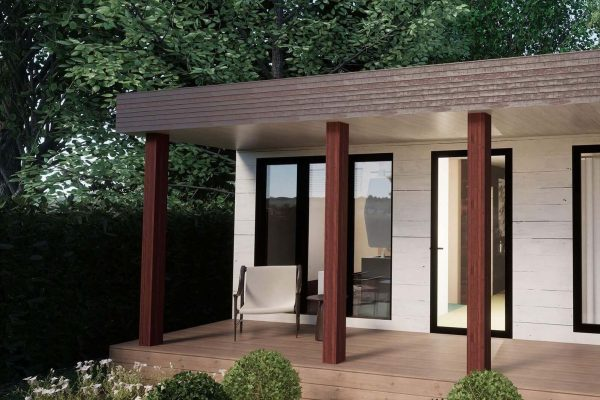
How Garden Suites Generate Rental Income in Ontario
For Ontario property investors, creating an additional rental unit on an existing residential property can provide a way to increase the income potential of land that is already owned. Garden Suites are one option that can turn an underused backyard area into a separate living space while keeping the main residence intact. We see this as an investment strategy that requires more than simply looking at expected rent. Investors need to consider construction costs, financing, operating expenses, vacancy periods, property use and the time required to recover the initial investment. A well planned garden suite can contribute to recurring rental income, but its financial performance depends on how carefully the project is evaluated before construction begins.
At City Modular Buildings Inc, we approach garden suite projects by looking at the complete property picture rather than treating the additional unit as an isolated building. A backyard rental can affect how the property is used, maintained and managed over many years. Understanding the relationship between the initial project cost and potential rental revenue is therefore important for anyone considering rental income ADU Ontario opportunities.
Why Garden Suites Can Create an Additional Income Stream
A garden suite can add a self contained living space to a property without requiring the investor to purchase a second lot. This distinction is important because the land is often the largest component of a real estate investment. Instead of acquiring another property to create rental income, an investor may be able to use available space on an existing residential lot, subject to applicable municipal requirements and approvals.
For investors researching a garden suites modular home, the financial model usually begins with the relationship between the total project investment and achievable rental revenue. The suite may be rented on a long term basis, depending on local rules and the property’s suitability. Income can then be assessed against construction, financing, insurance, maintenance, utilities and vacancy costs. This provides a more realistic picture than calculating gross rent alone.
Turning Underused Property Space Into Rental Potential
Backyard space does not normally generate direct income, even though it forms part of the property’s overall value. A garden suite changes the potential use of that space by introducing another functional residential unit. For an investor, the important question is whether the additional income generated by the suite justifies the cost of creating and maintaining it.
The answer can vary significantly from one property to another. Lot dimensions, access, servicing requirements, local regulations and construction specifications can all affect the final investment. A property with suitable backyard space may offer a different financial outcome from one requiring extensive site preparation or infrastructure work. This is why we recommend evaluating the property itself before relying on a general rental income estimate.
Building a Recurring Revenue Model
Rental income becomes more useful as an investment measure when it is considered over a longer period. Instead of focusing only on the first year’s rent, investors can estimate how the suite may contribute to cash flow over several years while accounting for expected operating costs and periods without a tenant.
A simple investment model can include the following:
Gross annual rent: Estimate realistic rental revenue based on comparable local properties and the size and condition of the suite.
Operating expenses: Account for maintenance, insurance, utilities where applicable, property management and other recurring costs.
Vacancy allowance: Include a reasonable amount for periods when the suite may be unoccupied or between tenants.
Financing costs: If construction is financed, interest and repayment obligations need to be included in the calculation.
Net rental income: Subtract ongoing expenses from gross rental revenue to understand the income available before considering the broader property investment.
This approach gives investors a clearer understanding of the difference between rental revenue and actual investment returns.
Understanding the ROI Behind a Garden Suite Investment
Return on investment is not determined by rent alone. The initial cost of the suite needs to be compared with the net income it produces over time. Investors may also consider whether the additional unit contributes to the overall usefulness and potential market appeal of the property, although these factors should be treated separately from rental cash flow.
For an Ontario investor, the financial assessment should therefore combine construction estimates with realistic income assumptions. The goal is not to assume that every garden suite will produce the same return. Instead, the investor should create a property specific projection that reflects the actual site, expected rent and ongoing costs.
Calculating Payback Period and Long Term Returns
One straightforward way to examine a project is to estimate the payback period. For example, if an investor spends a certain amount creating a garden suite and expects a specific amount of net annual rental income, the investor can estimate how many years it could take to recover the original investment through rental cash flow.
However, payback period should not be treated as the only measure. A suite can continue generating income after the initial investment has been recovered. Investors may also need to consider financing costs, changes in rent, maintenance requirements and future renovation expenses. Looking at several years of projected performance provides more useful information than focusing on a single year’s return.
A practical assessment can follow these steps:
Calculate the complete project cost: Include the building, site work, professional services, permits, utility connections and other applicable expenses rather than using the building price alone.
Estimate realistic annual rental revenue: Research comparable rental units and avoid using an optimistic rent assumption simply because it produces a stronger projected return.
Deduct recurring expenses: Include expected maintenance, insurance, utilities, property management and a vacancy allowance where relevant.
Compare net income with the investment: This helps establish the approximate cash flow and potential payback period.
Test different scenarios: Consider what happens if construction costs increase, rent is lower than expected or the unit experiences periods of vacancy.
This process allows an investor to see how sensitive the project is to changes in the assumptions.
Considering Financing Alongside Rental Revenue
Financing can significantly affect the financial structure of a garden suite project. An investor who uses borrowed funds will need to consider the relationship between rental income and financing obligations rather than viewing the full rental amount as available profit.
The financing structure can also influence cash flow during the early years of ownership. A project with substantial borrowing may have different monthly economics from one funded primarily through existing capital. Investors should therefore review their financing options, repayment terms and total borrowing costs before finalising their projections. Our Finance Modular Home resource can be considered as part of that broader financial planning process.
What Can Affect Rental Income From an Ontario Garden Suite
Not every garden suite will achieve the same rental income. Location is one factor, but the design and functionality of the unit also matter. A suite that provides practical living space, appropriate privacy and useful amenities may appeal to a different tenant group than a smaller or less flexible layout.
Investors should also consider how the suite fits into the existing property. Separate access, outdoor space, parking arrangements, privacy between occupants and the relationship between the main home and secondary unit can all influence how practical the rental arrangement becomes. These factors may not appear in a basic construction budget, but they can affect the tenant experience and the long term management of the property.
Location, Layout and Tenant Demand
Rental demand varies between Ontario communities and even between neighbourhoods. An investor should research local rental listings and comparable units rather than assuming that a garden suite will automatically achieve a particular monthly rent.
The layout also has a financial role. The number and arrangement of bedrooms, kitchen functionality, bathroom access, storage and living areas can influence the type of tenant the unit attracts. A thoughtful layout can make limited floor area more practical, which is particularly relevant when developing a backyard property with site constraints.
Investors exploring garden suites Ontario can use local examples to understand how garden suite projects may fit different property types. The key is to evaluate the specific market and property rather than applying one rental assumption across every Ontario location.
Controlling Construction and Operating Costs
A rental investment becomes less attractive financially when costs are underestimated at the beginning. Investors should consider the full project rather than looking only at the cost of the finished structure. Site preparation, servicing, access, approvals, professional requirements and other project expenses can influence the total amount invested.
Future operating costs matter as well. Maintenance, repairs, insurance and utilities can reduce the amount of rental income retained by the owner. A financial model that leaves these items out may present an incomplete view of the investment. We recommend building a contingency into the planning process so that unexpected expenses do not immediately disrupt the projected cash flow.
Using Design to Support the Investment Strategy
Design decisions should be connected to the intended rental strategy. Investors do not necessarily need the largest possible suite. Instead, the goal can be to create a practical unit that makes appropriate use of the available property while keeping construction and operating considerations in balance.
The floor plan should also account for how tenants will actually use the space. Efficient circulation, storage, natural light, functional kitchens and comfortable living areas can make a compact unit more usable without unnecessarily increasing its footprint.
Selecting a Practical Floor Plan
A garden suite floor plan should respond to the dimensions and conditions of the specific lot. A layout that works well on one property may not be appropriate for another because of setbacks, access, existing structures or available outdoor space.
For investors, the design process should connect functionality with the financial model. Our resource on garden suite floor plans provides context on how different layouts can approach smaller property footprints. The objective is to create useful living space without adding unnecessary complexity to the project.
Planning for Long Term Rental Management
Rental income is only one part of the investment. The property also needs to be practical to operate. Investors should think about maintenance access, separation between occupants, utility arrangements, repairs and future changes before construction begins.
A well planned suite can make routine management more straightforward, particularly when the investor is managing both the main residence and the rental unit. This can become increasingly important over several years, when maintenance requirements and tenant turnover become part of the normal ownership cycle.
Evaluating Garden Suites as a Passive Income Strategy
Garden suites can form part of a broader real estate income strategy, but investors should distinguish between passive income and completely hands off income. A rental unit still involves tenant communication, maintenance, financial administration and occasional decision making. Property management can reduce some of these responsibilities, but it also introduces another operating cost.
For this reason, we recommend assessing the investment according to the investor’s desired level of involvement. Someone managing the property personally may have a different cash flow structure from an investor who pays for professional management. Both approaches can be evaluated within the same financial model.
Creating a Balanced Investment Projection
A useful projection should include both positive and negative scenarios. Investors can create a base case using realistic rent and expected costs, followed by a more conservative scenario involving higher expenses or periods of vacancy.
This makes it easier to understand how resilient the investment may be under changing conditions. Rather than depending on one projected return, the investor can see how different assumptions affect the outcome. This is particularly useful when comparing a garden suite project with other possible uses of the same capital.
Looking Beyond the First Year
The value of a rental suite should be assessed over its expected useful life rather than only during its first year. Construction is a significant upfront investment, while rental income can continue over an extended period if the property remains suitable for occupancy and is properly maintained.
Over time, investors may also need to budget for repairs, replacements and improvements. These costs should form part of long term planning. The strongest financial analysis is therefore one that considers the entire ownership period, not simply the initial rent compared with the construction cost.
Conclusion
Garden Suites can provide Ontario property investors with another way to generate rental income from an existing residential property. The financial opportunity depends on several connected factors, including construction costs, rental demand, financing, operating expenses, vacancy and the suitability of the property itself.
At City Modular Buildings Inc, we believe the most useful approach is to treat a garden suite as a complete investment project. By examining the site, developing a practical design, estimating the full project cost and creating realistic rental scenarios, investors can make more informed decisions about whether the project fits their financial objectives. For investors ready to examine the construction side of the opportunity, our information on modular homes services provides a starting point for understanding the broader process.
FAQs
1. Can Garden Suites generate rental income in Ontario?
Yes, a Garden Suite can potentially generate rental income when it meets applicable requirements and is suitable for rental occupancy.
2. What affects the ROI of a garden suite?
Construction costs, rental income, financing, vacancy, maintenance, insurance and property-specific expenses can all affect ROI.
3. Is rental income from a garden suite completely passive?
Not necessarily. Owners may still need to manage tenants, maintenance and expenses unless they use a property management service.
4. Should investors include vacancy in their calculations?
Yes. Including a vacancy allowance can create a more realistic estimate of potential annual rental income.
5. Are garden suites suitable for every Ontario property?
No. Lot characteristics, municipal requirements, servicing, access, design limitations and local rental demand can vary between properties.