
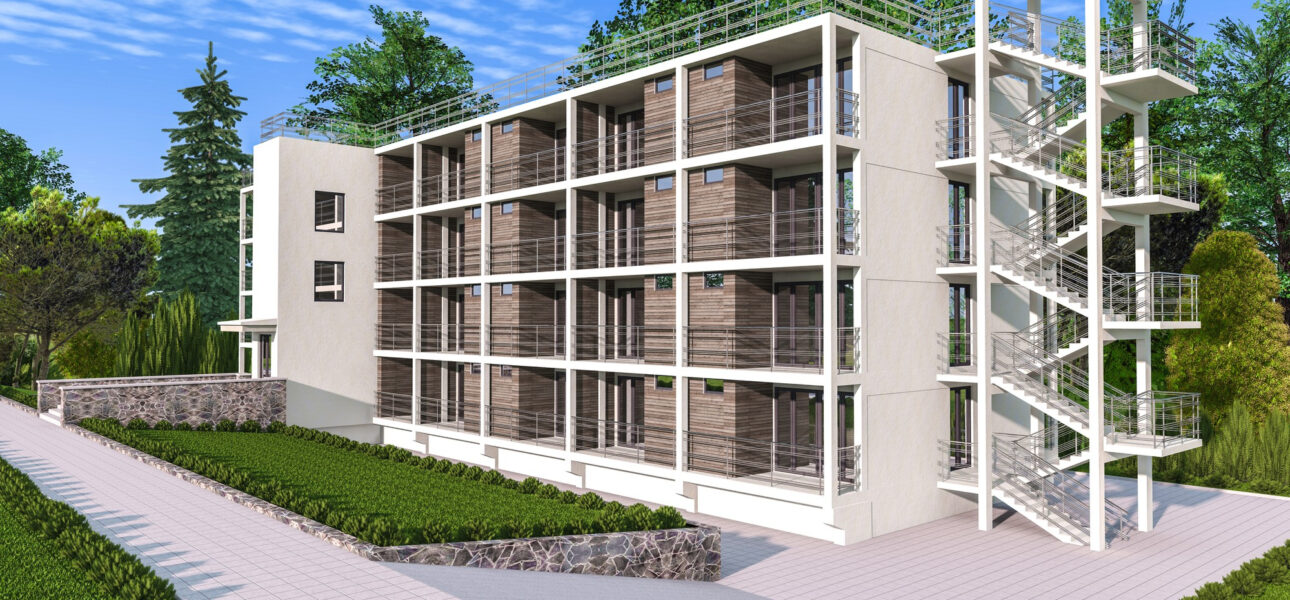
Sustainability is not only about what a building looks like when it is finished. A major part of environmental impact happens during construction through wasted materials, repeated deliveries, idling equipment, weather damage, and rework. That is why sustainable prefab buildings have become a smart option for owners who want cleaner job sites, tighter planning, and fewer resources wasted before the doors even open.
Sustainable prefab buildings can also support better long-term performance when the design focuses on envelope quality, efficient systems, and durable materials. City Modular Buildings Inc. builds modular solutions across Ontario, and the same structured approach used for Modular Homes / Cottages, Laneway Homes, and Garden Suites supports projects that prioritize waste reduction and lower emissions across the full construction process. Sustainable prefab buildings do not automatically guarantee sustainability, but the process advantages make it easier to achieve measurable improvements when the project is planned well.
Why Sustainable Prefab Buildings Reduce Waste At The Source
Sustainable prefab buildings often generate less waste because cutting, framing, and assembly happen in a controlled environment with repeatable processes. Instead of multiple crews working in changing weather and site conditions, production follows consistent plans and material handling procedures. That reduces common causes of waste such as damaged lumber, contaminated materials, incorrect cuts, and rushed rework that sends perfectly usable products to landfill.
Sustainable prefab buildings also make waste prevention more realistic because materials can be tracked and staged with better organization. When production is planned around standardized modules and consistent dimensions, off-cuts can be reduced and purchasing can be more precise. The Government of Canada tracks construction, renovation, and demolition waste as a significant waste stream, which reinforces why waste prevention and diversion matter at scale.
Why Controlled Production Usually Means Cleaner Waste Streams
Sustainable prefab buildings benefit from cleaner sorting because materials are handled in a more organized environment. Cleaner sorting means more materials can realistically be recycled or reused instead of being mixed into general waste. On busy job sites, recycling often breaks down due to contamination, weather, and schedule pressure. With sustainable prefab buildings, the process can reduce contamination risk and make diversion habits more consistent.
Fewer Deliveries And Shorter On Site Time Can Lower Emissions
Traditional construction can require countless deliveries of small loads, last-minute materials, and repeated trips due to missing items or schedule changes. Sustainable prefab buildings can reduce these emissions drivers because more of the building is coordinated into fewer, better-planned shipments. When scope is clearer earlier, material orders can be consolidated, and the total travel footprint can shrink.
Sustainable prefab buildings can also lower emissions by shortening the length of time heavy equipment operates on site. A long site build often involves weeks or months of equipment use, generators, and vehicle idling. With sustainable prefab buildings, more work is completed before arriving on site, which can reduce the duration of high-impact site activity. This does not mean transportation has zero impact, but it often means the overall project can be delivered with fewer total site-days of active construction.
Why Schedule Certainty Helps Emissions Too
Sustainable prefab buildings often follow a more predictable sequence, and predictability reduces wasteful behavior. When schedules slip, crews return multiple times, materials sit exposed longer, and deliveries get rescheduled. Those disruptions increase emissions even if the design is energy efficient. By supporting better schedule control, sustainable prefab buildings can reduce the stop-and-start patterns that inflate emissions in conventional projects.
Material Efficiency And Standardization Can Reduce Overbuying
One overlooked reason construction creates waste is overbuying. Teams often purchase extra materials “just in case” because timelines are tight and uncertainty is high. Sustainable prefab buildings reduce this tendency because production planning requires earlier decisions and clearer material takeoffs. When dimensions are finalized and repeated across modules, ordering becomes more precise and leftover material piles shrink.
Sustainable prefab buildings also make it easier to choose materials based on durability and lifecycle value rather than quick fixes. When the project team has time to evaluate options, they can select assemblies and finishes that reduce replacement frequency. Material efficiency is not only about using less upfront. It is also about choosing products that hold up longer so the building does not generate unnecessary repair waste over time.
Why Durability Is A Sustainability Feature
Sustainable prefab buildings are most eco friendly when they last. If a building needs early repairs, replacements, or major retrofits, the environmental cost increases because additional materials and labor are required. A controlled build process can support better consistency in assembly, which can reduce defects and help the building maintain performance and comfort for longer periods.
Energy Performance Is Easier To Plan And Execute Consistently
Operational energy use is often one of the largest contributors to a building’s long-term emissions. Sustainable prefab buildings can support energy performance because the envelope and systems can be installed with more consistency in a controlled environment. Better consistency helps reduce gaps in insulation, air leaks, and uneven assembly details that can undermine real-world performance.
Sustainable prefab buildings also encourage earlier design decisions, and early decisions make it easier to align mechanical systems with the building envelope. Natural Resources Canada provides building energy efficiency guidance that supports reducing energy use and carbon emissions over time, which reinforces why energy planning should be integrated into design rather than added at the end.
How Envelope Consistency Reduces Long Term Emissions
Sustainable prefab buildings often achieve better envelope repeatability because details can be built and checked consistently. A better envelope supports stable indoor comfort and reduces heating and cooling loads. When loads are lower and more predictable, mechanical systems can be sized and controlled more efficiently, which supports lower emissions over the life of the building.
Where Sustainable Prefab Buildings Can Fall Short
Sustainable prefab buildings are not automatically low impact if the design is inefficient or the site demands major remediation. A building can be prefabricated and still waste energy if glazing is poorly planned, HVAC is oversized, or insulation targets are weak. Prefabrication is a process advantage, not a guarantee of sustainable outcomes.
Sustainable prefab buildings also require logistics planning that fits the site. Transport, crane staging, access routes, and installation sequencing all affect schedule and emissions. If a project is rushed and delivery planning is poor, the building may require extra trips, extra equipment time, and longer site activity. The best projects use the prefab process to reduce rework and disruption, while also planning logistics realistically so the sustainability gains are not diluted.
Why Honest Sustainability Messaging Builds Trust
Sustainable prefab buildings should be presented with practical benefits, not vague claims. Owners and communities trust sustainability content more when it explains what actually changes: less waste, fewer site-days, better material control, and more consistent execution. When sustainability is framed as a set of measurable improvements, it becomes easier to defend and easier to deliver.
Practical Examples Of How Sustainable Prefab Buildings Cut Waste And Emissions
Sustainable prefab buildings can deliver eco benefits across many project types, including offices, clinics, multi-unit housing, and accessory residential structures. The core advantages tend to show up in similar ways: fewer damaged materials, less rework, tighter ordering, and shorter disruption periods. These benefits are especially meaningful on sites where traditional builds would cause long disruption or where weather exposure would create repeated replacement of materials.
Sustainable prefab buildings also support phased growth in a way that can reduce overbuilding. Instead of building a large facility based on uncertain projections, owners can add space in stages, learning from real operational needs. That reduces the chance of building unused square footage that still carries embodied carbon and long-term operating emissions.
Real World Sustainability Wins Owners Often Notice
Sustainable prefab buildings can feel different in practice, not just in concept. Here are common results owners often notice when the project is planned and executed well:
- Cleaner job sites with less scattered debris and fewer damaged materials
- Reduced rework because modules are assembled with repeatable processes
- Fewer last-minute delivery trips due to clearer material coordination
- Shorter periods of heavy on-site construction activity
- Better envelope consistency that improves comfort and reduces energy waste
- Easier planning for phased expansion without overbuilding early
- More predictable schedules that reduce stop-and-start emissions patterns
Sustainable prefab buildings are not only about a finished label. They are about process improvements that reduce waste and emissions throughout the build.
How City Modular Buildings Inc. Supports A Sustainability Mindset
City Modular Buildings Inc. focuses on modular building across Ontario, and that process focus naturally supports sustainability goals when the project is designed thoughtfully. Sustainable prefab buildings work best when scope is clear early, materials are planned efficiently, and the timeline is managed with discipline. That same structured workflow shows up in modular planning across service categories like Modular Homes / Cottages, Laneway Homes, and Garden Suites, which are also strong internal linking opportunities for this blog.
Sustainable prefab buildings content also performs better when it connects readers to real options. Some readers will start with sustainability research and then want to explore practical solutions for their property. Linking to Modular Homes / Cottages, Laneway Homes, and Garden Suites helps readers see real modular pathways while reinforcing City Modular Buildings Inc. as a builder that understands both process and performance.
Why Internal Linking Helps Sustainability Content Convert
Sustainable prefab buildings is a high-intent topic because many readers are already motivated by cost control, timelines, and environmental impact. Internal links to relevant service pages help them take the next step rather than leaving after a general article. When sustainability education connects to clear services, the content becomes both informative and action-oriented.
Why Choose City Modular Buildings Inc.
City Modular Buildings Inc. builds modular solutions across Ontario with a structured approach that helps clients plan scope, schedule, and delivery with fewer unknowns. That matters because sustainable prefab buildings depend on early decisions and disciplined coordination. When planning is organized and the build process is controlled, waste and rework drop, and it becomes easier to deliver real sustainability improvements rather than marketing promises.
City Modular Buildings Inc. also provides natural internal linking pathways through service categories like Modular Homes / Cottages, Laneway Homes, and Garden Suites. These services help reinforce modular credibility and give readers clear next steps after learning why sustainable prefab buildings reduce waste and emissions. For many owners, the best sustainability decision is the one that also delivers predictable timelines, consistent quality, and long-term comfort.
Make Sustainability Part Of Your Next Build Decision
Sustainable prefab buildings reduce waste and emissions because the construction process becomes more controlled, more predictable, and less dependent on inefficient site habits. Cleaner material handling reduces landfill waste, consolidated logistics can lower transportation impacts, and consistent envelope execution supports lower operational energy use. Government resources reinforce why construction waste reduction and building energy efficiency are key sustainability levers, which aligns with the practical advantages of sustainable prefab buildings.
If you are exploring sustainable prefab buildings in Ontario, the next step is to define your goals clearly: timeline, site realities, performance priorities, and the type of space you need. From there, you can explore City Modular Buildings Inc. solutions like Modular Homes / Cottages, Laneway Homes, and Garden Suites to connect sustainability goals to real build options and move toward a project plan you can trust.
Frequently Asked Questions
1) Why do sustainable prefab buildings usually create less construction waste?
Sustainable prefab buildings reduce waste by using controlled production, precise material ordering, and repeatable assembly that reduces rework and damaged materials.
2) Do sustainable prefab buildings always have lower emissions than site-built projects?
Not always, but sustainable prefab buildings often reduce emissions by shortening on-site construction time and reducing repeated deliveries and rework.
3) How do sustainable prefab buildings support better recycling and diversion?
Sustainable prefab buildings can support cleaner material sorting and less contamination, which improves the chance that waste is diverted rather than sent to landfill.
4) Can sustainable prefab buildings be designed to use less energy over time?
Yes. Sustainable prefab buildings can support stronger envelope consistency and efficient systems planning, and NRCan guidance highlights why building energy efficiency reduces long-term emissions.
5) What sustainability factors matter most besides prefabrication?
Material durability, envelope performance, HVAC design, and realistic logistics planning all influence whether sustainable prefab buildings deliver the expected benefits.
6) Which City Modular Buildings Inc. services can I link to from this blog?
You can internally link to Modular Homes / Cottages, Laneway Homes, and Garden Suites from this sustainable prefab buildings blog.
7) What is the best first step to plan sustainable prefab buildings for my site?
Start with a feasibility review that confirms access, utilities, and performance goals, then build a scope plan that uses the sustainable prefab buildings process to reduce waste and emissions from design through installation.