
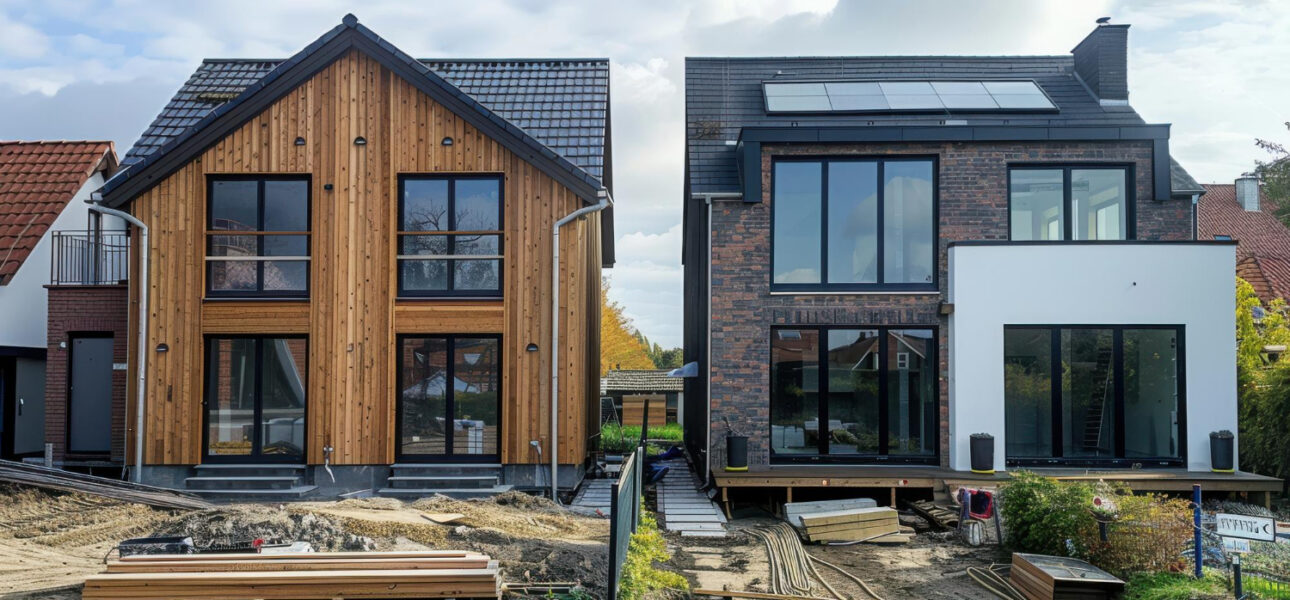
Choosing how to build a home is about more than selecting a floor plan. For Ontario buyers, the construction method can influence the budget, move-in date, site disruption, financing plan, and how much uncertainty the family has to manage along the way. That is why modular homes vs traditional construction has become an important comparison for homeowners who want to understand not only what each method costs, but also how the complete process differs from planning through occupancy.
The most useful way to compare modular homes vs traditional construction is to look at the entire project rather than one advertised price or one construction phase. A modular home can move faster because factory production and site preparation may overlap, while a traditional build usually completes more work directly on the property. Still, both methods need zoning review, permits, foundations, utilities, inspections, and proper site planning. City Modular Buildings Inc. helps Ontario property owners evaluate these factors through a structured modular approach, with related services such as Modular Homes / Cottages, Laneway Homes, and Garden Suites.
Understanding How The Two Construction Methods Differ
When comparing modular homes vs traditional construction, the biggest difference is where and when the work happens. Modular homes are produced in sections in a controlled manufacturing environment and later transported to a prepared site for installation, connection, and final finishing. Traditional homes are built primarily on the property, where excavation, framing, roofing, mechanical work, insulation, drywall, finishes, and inspections usually follow a longer site-based sequence. Both can produce permanent, high-quality homes when they are properly designed, permitted, built, and inspected.
The construction sequence changes the type of risk homeowners face. With modular homes vs traditional construction, modular projects generally require more decisions to be finalized before factory production begins. Traditional construction can provide more opportunity for changes during the build, but those changes may affect labour scheduling, material orders, permits, and cost. The Government of Ontario Building a Modular House guide also makes clear that modular homes still require municipal building permits and that both factory-built modules and site work must satisfy applicable requirements.
Why Process Matters As Much As The Finished Home
A homeowner may eventually see two finished houses that look equally complete, but the journey to get there can be very different. Modular construction relies on early coordination between design, factory production, foundation work, delivery, and installation, while site-built construction relies heavily on trade sequencing at the property. This is why modular homes vs traditional construction should be compared by process predictability as well as appearance, because the method can affect how easily a homeowner manages decisions, site disruption, and schedule pressure.
Cost Comparison: Where Your Budget Really Goes
Cost is often the first question in modular homes vs traditional construction, but a simple price-per-square-foot comparison can be misleading. A modular quote may cover the factory-built portion while leaving foundation work, utility connections, delivery, crane work, grading, permits, and landscaping restoration outside the starting price. A traditional quote may also exclude several of these items or treat them as allowances. The only reliable comparison uses the same design goals, finish level, site conditions, and inclusions on both sides.
For modular homes vs traditional construction, many of the largest site-related expenses are actually shared. Both methods may require land preparation, excavation, foundations, water and sewer connections, electrical service, driveway access, drainage, and permits. The difference is often how predictable the building portion becomes once the design is finalized. Statistics Canada’s Building Construction Price Index is a useful external reference for understanding that construction costs change over time, which is another reason buyers should use current quotes and maintain a reasonable contingency instead of relying on old online estimates.
Where Modular Construction Can Improve Cost Control
Modular construction may improve cost control when early design decisions reduce change orders and factory production limits material exposure, repeated handling, and some forms of on-site rework. That does not mean modular is automatically cheaper. In modular homes vs traditional construction, the strongest modular cost advantage often comes from clearer scope and a shorter period of active construction rather than from every individual material costing less.
Timeline Comparison: Which Method Usually Builds Faster?
Timeline is where modular homes vs traditional construction often shows the clearest difference. A traditional project usually completes most major stages on-site, and each trade may need to wait for the previous stage before starting. Weather, labour availability, inspections, and material deliveries can therefore extend the schedule. Modular construction can allow the factory to build the home while excavation, foundations, and selected site services are being prepared, provided the municipality and project sequence allow those activities to move forward.
This parallel workflow can shorten the overall path to installation, but buyers should not confuse fast assembly with guaranteed fast occupancy. Modular homes vs traditional construction still share several schedule risks, including permit review, zoning issues, site conditions, utility coordination, inspections, and financing milestones. A modular home may arrive quickly, but it cannot be installed properly if the foundation is not ready. Likewise, a traditional build may move efficiently when the lot is straightforward, the design is simple, and reliable trades are available.
Why Overlapping Work Can Save Valuable Time
The practical speed advantage comes from doing compatible tasks at the same time. While modules are being produced, crews may be preparing the site and foundation, which can remove weeks or months of sequential work from the project. In a modular homes vs traditional construction comparison, this overlap is most valuable when the design is locked early, permits are coordinated, and the site team and factory team work from the same approved information.
Sitework, Access, And Property Conditions
Site conditions can change the outcome of modular homes vs traditional construction more than many buyers expect. A simple serviced lot may support either method easily, while a rural, waterfront, wooded, or sloped property may need excavation, septic or well work, rock removal, drainage solutions, or long utility runs. These costs can affect either construction method.
Modular projects introduce an additional access question because completed modules must physically reach the property and be positioned safely. Roads, bridges, overhead wires, tree branches, sharp turns, soft ground, neighbouring structures, and crane placement can all affect the installation plan. Traditional construction may be more forgiving where large-module delivery is difficult because materials can arrive in smaller loads. This means modular homes vs traditional construction should always begin with a site feasibility review rather than assuming one method is automatically better for every lot.
Delivery Access Can Determine Whether Modular Is Practical
A modular design should not be finalized until the delivery route and installation strategy are understood. Module dimensions, transportation permits, crane reach, staging space, and foundation placement need to work together. For buyers considering Modular Homes / Cottages, early access planning helps City Modular Buildings Inc. determine whether modular delivery is practical and how the building configuration can respond to the property.
Quality, Inspections, And Building Code Compliance
Quality in modular homes vs traditional construction depends more on the builder, specifications, workmanship, and inspections than on the construction label. Modular production can protect materials from prolonged weather exposure, while traditional construction can also deliver excellent quality with skilled trades and strong supervision. Buyers should compare details, warranties, documentation, and inspection processes rather than assume one method is automatically superior.
Ontario treats a modular home as a real building project that must meet applicable Building Code requirements. The Government of Ontario’s modular housing guidance explains that the factory-built modules and site work such as foundations, grading, and installation are part of the approval and inspection process. In modular homes vs traditional construction, modular projects may involve factory inspections as well as municipal inspections at the permanent site, while traditional projects are inspected primarily as construction progresses on-site.
Documentation Helps Protect Quality
Clear documentation is especially important for modular homes because reviewers need to understand which components are completed and inspected at the factory and which are completed locally. Good drawings, factory certification information where applicable, foundation details, and installation instructions reduce uncertainty. This makes documentation an important quality-control tool in the modular homes vs traditional construction decision, not merely a permit requirement.
Energy Efficiency And Long-Term Operating Costs
The upfront price does not tell the whole story in modular homes vs traditional construction because homeowners continue paying for heating, cooling, electricity, maintenance, and repairs for years after move-in. Energy performance depends on insulation, windows, air sealing, mechanical systems, ventilation, orientation, and workmanship. Either construction method can deliver an efficient home if these elements are designed and executed well.
Controlled production can support consistency in insulation and air sealing, while traditional construction can achieve equal or higher performance with the right design and trades. When comparing modular homes vs traditional construction, ask about energy targets, HVAC sizing, ventilation, window performance, and maintenance instead of choosing only by the lowest construction price.
Think In Terms Of Ownership Cost, Not Only Build Cost
A home that costs slightly more to build may provide better value if it uses less energy, requires fewer repairs, and offers stronger comfort year-round. Buyers should therefore evaluate modular homes vs traditional construction using both initial project cost and expected long-term operating performance, especially when planning a permanent family home or four-season cottage.
A Practical Checklist For Comparing Both Options
The best modular homes vs traditional construction decision starts with the same project assumptions. Homeowners should compare equivalent square footage, finish levels, foundation types, energy expectations, sitework, landscaping, and servicing. If one quote includes these items and the other does not, the cheaper option may simply be less complete. A side-by-side scope sheet is often more useful than comparing headline prices.
The checklist below helps families organize a modular homes vs traditional construction comparison around total project value. It can also reveal whether Modular Homes / Cottages, Laneway Homes, or Garden Suites better match the actual housing need.
- Compare the same approximate square footage and finish level.
- Confirm what each quote includes for foundations and sitework.
- Add permits, engineering, utilities, grading, and drainage to both budgets.
- Compare realistic planning-to-occupancy timelines, not just construction time.
- Review weather exposure and seasonal scheduling risks.
- Confirm delivery and crane access if modular construction is considered.
- Ask how design changes affect cost and timeline.
- Compare insulation, windows, ventilation, and HVAC expectations.
- Review warranty, inspection, and documentation processes.
- Include financing, temporary housing, and contingency in the all-in budget.
Which Option Makes More Sense For Your Project?
For buyers who value schedule predictability, early decision-making, reduced on-site construction, and a structured production process, modular homes vs traditional construction may lean toward modular. This is particularly relevant for projects where site preparation can overlap with manufacturing and where delivery access is straightforward. Modular can also appeal to homeowners who prefer to finalize most design decisions early and then follow a defined sequence toward installation.
Traditional construction may make more sense when the design requires unusual geometry, extensive site-built customization, or a property where module transportation and crane installation are difficult. It can also suit owners who want more flexibility to make changes while construction is underway, provided they understand the potential impact on cost and schedule. The strongest modular homes vs traditional construction choice is therefore property-specific, budget-specific, and dependent on how the homeowner wants to manage the building process.
Match The Method To The Goal
A family building a full-time residence may prioritize long-term comfort and predictable occupancy. A cottage owner may prioritize reduced weather exposure and less on-site construction. An urban homeowner may discover that Laneway Homes or Garden Suites solve the actual housing need more efficiently than building an entirely new primary residence. The best construction strategy starts with the goal first and the method second.
Why Choose City Modular Buildings Inc.
City Modular Buildings Inc. helps Ontario homeowners approach modular construction with a structured process that connects feasibility, design, permitting, site preparation, production, delivery, and installation. That structure is especially important when comparing modular homes vs traditional construction because the benefits of modular depend on coordination. Factory speed has limited value if the foundation, utility plan, permits, or delivery route are not ready at the correct time.
The company also provides several related modular pathways, including Modular Homes / Cottages, Laneway Homes, and Garden Suites. This gives homeowners the ability to evaluate different solutions before committing to a full build. City Modular Buildings Inc. focuses on helping clients understand what their property can support, how project stages fit together, and what needs to be clarified early so the modular homes vs traditional construction decision is based on realistic site conditions rather than broad assumptions.
Choose The Right Construction Method For Your Ontario Project
Modular homes vs traditional construction is not simply a question of which method is cheaper or faster. The right comparison includes design, permits, sitework, foundations, utilities, delivery access, inspections, energy performance, financing, and the homeowner’s tolerance for schedule uncertainty. Modular construction can offer a meaningful timeline advantage because production and site preparation may overlap, while traditional construction can provide greater flexibility for highly customized site-built work.
If you are deciding between modular homes vs traditional construction for an Ontario property, City Modular Buildings Inc. can help you begin with a feasibility review and an all-in project comparison. Whether your goal is Modular Homes / Cottages, Laneway Homes, or Garden Suites, the first step is understanding the lot, scope, budget, and desired move-in timeline. A clear comparison helps you choose a building method that supports both your immediate project and your long-term property goals.
Frequently Asked Questions
A fair modular homes vs traditional construction comparison should use equivalent assumptions for size, finishes, sitework, foundations, utilities, permits, and energy expectations. If one quote excludes major items that the other includes, the cheaper headline price can be misleading.
Schedule also has a financial impact through financing, temporary housing, storage, and carrying costs. The seven questions below cover the issues buyers most often consider before choosing modular homes vs traditional construction.
-
Is modular homes vs traditional construction usually cheaper for modular?
Not necessarily. Modular may improve cost predictability and reduce certain schedule-related expenses, but sitework, transportation, foundations, finishes, utilities, and project complexity determine the final all-in cost. -
Which is faster in modular homes vs traditional construction?
Modular construction can often be faster because factory production and site preparation may overlap, while traditional construction usually completes more stages sequentially on the building site. -
Does modular homes vs traditional construction affect home quality?
Both methods can produce high-quality permanent homes. Quality depends on design, materials, workmanship, supervision, inspections, and how well the completed building is protected from moisture and other construction risks. -
Do modular homes vs traditional construction require the same permits?
Both require municipal building permits and must satisfy applicable requirements. Modular projects also need coordination for factory-built components, site work, installation, and inspections. -
How does site access affect modular homes vs traditional construction?
Modular construction requires a viable transport and installation route for completed modules. If roads, overhead wires, trees, or crane access create major obstacles, traditional site-built construction may sometimes be more practical. -
Which City Modular Buildings Inc. services fit this comparison?
For this modular homes vs traditional construction blog, the most relevant internal service links are Modular Homes / Cottages, Laneway Homes, and Garden Suites. -
What should I compare first in modular homes vs traditional construction?
Start with a property feasibility review and two equivalent all-in scopes covering design, permits, foundations, sitework, utilities, finishes, energy performance, construction timeline, and contingency.