
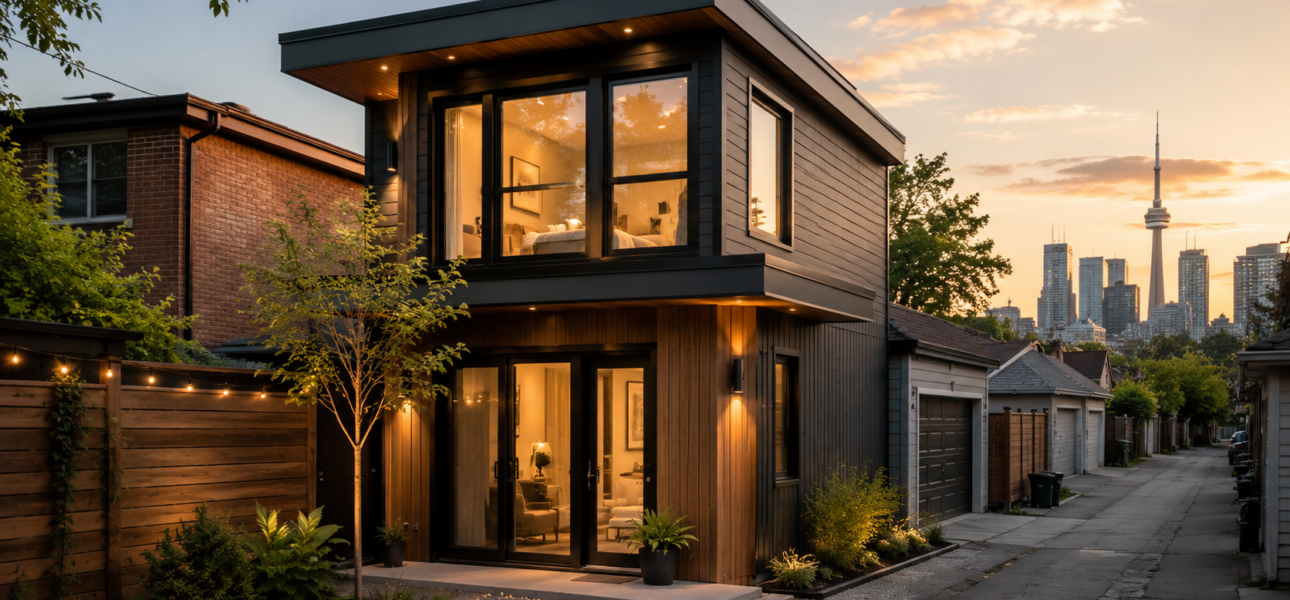
Toronto homeowners are looking for smarter ways to add livable space without leaving the neighbourhood they love. That is why laneway housing keeps getting more attention, especially for families who want multigenerational living, a private home office, or long-term rental potential in the back of the property. If you are searching for a laneway house Toronto guide 2026, the most important thing to know is that a laneway house is a real dwelling, with real zoning and building code requirements, and the path to approval is very step-by-step.
This laneway house Toronto guide 2026 breaks down what a laneway house is, who can build one, what the City typically looks for, and what a practical build plan looks like from feasibility to move-in. City Modular Buildings Inc. supports modular delivery across Ontario, and a structured approach is especially useful for laneway projects because success depends on planning, access, servicing, and permit readiness. When you treat your laneway house Toronto guide 2026 plan like a full building project from day one, your timeline and budget become far more predictable.
What Is A Laneway House In Toronto
A laneway house is a self-contained home built on the same lot as a primary house, typically at the rear of a property that has access to a public laneway. In the simplest terms, it is a backyard home designed for full-time living, with its own kitchen, bathroom, sleeping area, and the safety features required for a legal dwelling. A laneway house Toronto guide 2026 should always start with this definition because many people confuse laneway houses with sheds, studios, or informal conversions. Toronto treats a laneway suite as a real unit that must comply with zoning and the Ontario Building Code, and you must apply for a building permit as part of the process.
In Toronto, the key eligibility concept is the laneway itself. If your property does not abut a public lane, you may not qualify for a laneway suite, but you may still qualify for other options depending on your location and lot conditions. That is why this laneway house Toronto guide 2026 also encourages homeowners to compare alternatives like Garden Suites when laneway access is not available. City Modular Buildings Inc. service pages like Laneway Homes and Garden Suites are natural internal links for that comparison, and they help homeowners understand which solution fits their property best.
Laneway House Versus Garden Suite
A laneway house is generally tied to the presence of a public laneway behind the property, which can influence access, servicing routes, and placement. A garden suite is usually a detached unit in the backyard that is not necessarily dependent on laneway frontage, depending on local rules and approvals. In a laneway house Toronto guide 2026 conversation, this difference matters because many homeowners start with laneway housing and then discover their lane access or lot constraints point them toward a garden suite instead.
If you are unsure which applies, start with a quick feasibility check: confirm whether you have a public laneway, confirm basic lot layout and setbacks, and confirm where servicing routes would run. That quick check often saves weeks of redesign later.
Who Can Build A Laneway House In Toronto
A laneway house Toronto guide 2026 should be clear about the first filter: your property must meet the City’s requirements and zoning conditions for laneway suites, and you will still need a building permit. Toronto’s official building permit guide for a new laneway suite outlines the permit pathway and application requirements, which is the best place to confirm the City’s current expectations.
The second filter is site reality. Even if your property is eligible on paper, a laneway house Toronto guide 2026 plan still needs to confirm things like access for construction, the ability to connect utilities, and the ability to meet life safety expectations such as firefighting access. These practical site issues are often what turns a “yes in theory” into a “needs a revised plan” in reality.
A Practical Eligibility Snapshot
If you want a realistic laneway house Toronto guide 2026 starting point, look for these conditions: a property that abuts a public lane, enough backyard depth to fit a small detached dwelling while meeting setbacks, and a reasonable path for servicing without extreme trenching constraints. If any of these are weak, you may still be able to build, but you should expect more design coordination and potentially more cost.
The Ontario Ministry of Municipal Affairs and Housing also notes that municipalities may use different terms and that you should check local official plan policies, zoning by-laws, and permit requirements for your property. This reinforces why the best laneway house Toronto guide 2026 approach is always site-specific.
Step By Step Process For A Laneway House Toronto Guide 2026 Build
The easiest way to understand the full process is to treat it as stages. The stages protect your time because each stage answers a different question: can you build it, what will you build, can it be approved, and how will it be installed and finished. Toronto also offers information on pre-approved garden and laneway suite plans, and while you still need a permit, pre-approved plans can reduce design time and improve submission consistency for some homeowners.
A strong laneway house Toronto guide 2026 plan does not jump straight into design renderings. It starts with feasibility and constraints, then moves into a permit-ready package, then lines up sitework and build sequencing. This staged approach also makes budgeting clearer because you can separate design costs, permit costs, site servicing costs, and construction costs instead of guessing one big number.
Stage One: Feasibility And Site Review
Feasibility is where you confirm access, utility routes, approximate setbacks, and the likely footprint. You also confirm whether there are protected trees or other conditions that could limit placement. A clean feasibility stage makes the rest of the laneway house Toronto guide 2026 process faster because it reduces redesign and reduces back-and-forth during permitting.
Feasibility is also where you decide the purpose of the unit. A rental-focused laneway house may prioritize durable finishes and privacy. A family-focused laneway house may prioritize accessibility and comfortable daily living. The clearer the purpose is, the easier it is to lock a design that fits real life, not just a floor plan.
Design And Layout Planning That Works In Toronto
A laneway house Toronto guide 2026 should emphasize that good design is not about squeezing the biggest box into the yard. It is about creating a comfortable home with daylight, privacy, and efficient circulation while respecting setbacks and neighbouring conditions. Toronto properties can be tight, so layout efficiency matters a lot. Many successful laneway houses keep the footprint compact and use smart storage, clear sightlines, and careful window placement to avoid privacy conflicts with the main home and adjacent neighbours.
The best design approach is to create a unit that feels complete even at a smaller size. That includes a real kitchen layout, a bathroom that is not cramped, and a sleeping area that supports daily comfort. In Toronto, it also means thinking about outdoor space and pathways, because the laneway house should feel like a deliberate second dwelling, not an awkward structure that blocks the yard.
Planning For Accessibility And Long-Term Use
Many laneway house Toronto guide 2026 readers are planning for parents, adult children, or long-term flexibility. That is why it is smart to plan for accessibility even if you do not need it immediately. Wider clearances, better bathroom layouts, and safer transitions can make the unit more usable for more people over time. If the unit becomes a rental later, that accessibility thinking can also expand the pool of potential tenants.
This is also where a modular approach can help. When decisions are made early and a clear scope is locked, you can avoid late changes that often increase cost and delay in tight urban projects.
Servicing, Utilities, And Sitework Reality
Servicing is often the backbone of a laneway house Toronto guide 2026 plan. You need a clear plan for water, sanitary, storm considerations, electrical, and sometimes gas. The cost and complexity can change depending on where the main home services are located, how far the run is to the back of the property, and how much hardscape must be disturbed to trench and connect.
Sitework also includes foundations, grading, drainage, and restoration. Many homeowners underestimate the restoration side. After trenching, you may need to restore walkways, patios, fences, or landscaping. A realistic laneway house Toronto guide 2026 budget includes those restoration items because they are part of the real all-in outcome, not optional extras.
Construction Access And Staging Matters
A laneway house has a unique access advantage compared to some backyard builds because the laneway can support staging and delivery. That said, you still need a safe and realistic plan for deliveries, waste removal, and work sequencing. If you do not plan staging, the project can become disruptive to neighbours and more expensive due to inefficient work patterns.
A strong build team treats access planning as part of the design, not something figured out mid-project.
Quick Checklist Before You Commit
Here is a practical laneway house Toronto guide 2026 checklist you can run before you invest heavily in drawings. It helps you confirm the basics and identify what questions you need answered early.
- Confirm your property abuts a public laneway and appears eligible under City rules
- Measure approximate backyard depth and identify likely building placement zones
- Identify protected trees, roots, and existing structures that limit footprint
- Locate utility lines and map a realistic servicing route to the rear
- Confirm a safe path for construction access and staging from the lane
- Decide the unit purpose: family use, rental, or long-term flexibility
- Set a finish tier early so your budget stays predictable
- Choose a timeline target and work backward for design and permits
If this checklist raises red flags, that does not always mean you cannot build. It means your laneway house Toronto guide 2026 plan needs a tighter feasibility phase before moving into full design.
Permits And Approvals In Toronto
Permitting is a major timeline driver for any laneway house Toronto guide 2026 plan. You will need to apply for a building permit, and the City’s permit guide for new laneway suites outlines what you need to prepare and submit. The biggest cause of delay is incomplete submissions or drawings that are not coordinated across architectural, structural, and mechanical expectations.
If you want a smoother permitting experience, treat your permit package like a product. It should be complete, clear, and consistent. If your plan changes during review, update the full package so reviewers are not trying to reconcile conflicting details across documents. This is where many projects lose time because small mismatches can trigger resubmissions.
Pre-Approved Plans Can Help Some Homeowners
Toronto’s pre-approved garden and laneway suite plans program exists to help homeowners choose designs that have already been reviewed for compliance elements, while still requiring a permit for the specific site. In a laneway house Toronto guide 2026 approach, pre-approved plans can reduce early design time and can improve the consistency of your submission, especially if you want a faster start.
Pre-approved plans are not automatically the best choice for every property. Some lots need custom adjustments due to trees, access, or unusual conditions. The best use case is when your lot fits common patterns and you want to reduce early design friction.
Timeline: What To Expect From Planning To Move-In
A realistic laneway house Toronto guide 2026 timeline includes feasibility, design, permits, sitework, build and installation, and final inspections. The total timeline depends on your project complexity and how quickly you lock decisions. Many projects feel slow at the beginning because permits and planning take time, then the pace increases once sitework and construction are underway.
If you want a faster timeline, the strategy is simple: lock scope early and prevent redesign loops. Late changes are expensive in both time and cost because they can affect permitting, servicing plans, and construction sequencing. A structured modular approach can help with this because it encourages early scope lock and defined build stages.
Budget Planning That Avoids Surprises
A laneway house Toronto guide 2026 budget should separate the building scope from the site scope. Building scope includes the structure, interior finishes, and core systems. Site scope includes foundations, utility connections, trenching, grading, and restoration. When homeowners price only the building, they underestimate the total. When they include site scope early, the project becomes far easier to finance and plan.
This is also a good moment to connect internal service pages. If you are comparing options, City Modular Buildings Inc. pages like Laneway Homes and Garden Suites can help readers understand which solution fits their lot. If you are also considering a full residence build elsewhere, Modular Homes / Cottages is another natural internal link that keeps readers moving through the site.
Why Choose City Modular Buildings Inc.
City Modular Buildings Inc. supports modular solutions across Ontario with a structured process that emphasizes planning, scope clarity, and predictable delivery. That matters for a laneway house Toronto guide 2026 project because the main risks are almost always planning-related: unclear scope, servicing surprises, or permit delays caused by incomplete packages. A disciplined process reduces these risks and helps homeowners move from idea to approval with fewer wasted steps.
City Modular Buildings Inc. also gives you a strong internal linking structure through service categories like Laneway Homes, Garden Suites, and Modular Homes / Cottages. Those service pages help readers explore related solutions and support a cleaner SEO journey. For homeowners, that means they can compare options, understand timelines, and take action without feeling lost or overwhelmed.
Build Your Laneway House With A Clear Plan And Fewer Surprises
A laneway house can be an excellent way to add a second dwelling in Toronto, but success depends on eligibility, smart design, realistic servicing plans, and a permit-ready approach. If you want a laneway house Toronto guide 2026 plan that actually moves forward, start with feasibility, confirm your site constraints, define the unit purpose, and then build a coordinated permit package based on City guidance. The Ontario government also reinforces the importance of checking municipal rules, zoning by-laws, and permit requirements when building a laneway house.
If you are ready to take the next step, City Modular Buildings Inc. can help you plan with a structured modular mindset. Whether you are focused on Laneway Homes or comparing Garden Suites and Modular Homes / Cottages for other property goals, the best outcomes come from clear scope, early planning, and a timeline you can trust.
Frequently Asked Questions
1) What Does Laneway House Toronto Guide 2026 Mean By A Laneway House?
Laneway house Toronto guide 2026 refers to a self-contained secondary dwelling built at the rear of a property that has access to a public laneway, designed for full-time living and permit compliance.
2) Do I Need A Permit For A Laneway House Toronto Guide 2026 Project?
Yes. A laneway house Toronto guide 2026 project requires a building permit, and Toronto provides an official permit application guide for new laneway suites.
3) Is Every Backyard Eligible Under A Laneway House Toronto Guide 2026 Plan?
No. A laneway house Toronto guide 2026 plan depends on laneway access, zoning conditions, setbacks, and site feasibility, so eligibility must be confirmed for your specific property.
4) Can Pre-Approved Plans Help A Laneway House Toronto Guide 2026 Build?
Yes. Toronto offers pre-approved garden and laneway suite plans, and you still need a permit, but they can reduce early design friction for some sites.
5) What Is The Hardest Part Of A Laneway House Toronto Guide 2026 Build?
For many homeowners, servicing routes and sitework are the hardest parts because trenching, utilities, and restoration often control cost and complexity.
6) Which City Modular Buildings Inc. Services Can I Link From This Laneway House Toronto Guide 2026 Blog?
You can internally link to Laneway Homes, Garden Suites, and Modular Homes / Cottages as related service pages.
7) What Should I Do First If I Want A Laneway House Toronto Guide 2026 Plan?
Start with feasibility: confirm laneway access and basic zoning fit, map utility routes, and then prepare a coordinated permit package aligned with City guidance.